• In 2025 I’d like to add more content to this blog that goes beyond simply reporting about our training/competing life. Instead I hope to provide posts two or three times a week that might be helpful or interesting to readers who want to learn more about training various behaviors, especially if you have spaniels! Please let me know in the comments if there is something in particular you’d like to see.

    One category I hope you’ll find interesting is training new, unusual behaviors for canine freestyle. We’re starting some early prep for Brian’s Grand Championship in the InSync division, which is heelwork to music. In this division, there are no weaves or distance moves, and the dog needs to stay in close proximity to the human. One position I’d like to progress to moving laterally is Brian’s “side” position, where he is perpendicular to me, rather than the standard parallel position in heeling. He has only a rudimentary idea of that position, which you can see in the short clip below from an earlier video competition:

    For his Grand Championship, I’d like to utilize this position more in one sequence, asking him to move laterally (to his left or right rather than forward or backward). To teach this, I’m using various aids that he’s familiar with–a platform, gate, and open dish of food–to help teach the position. He’s used all these aids before in learning other behaviors, so he has a strong history with them. Here’s an abbreviated video of our second session, along with some doodling at the end where you can see we “accidentally” discover the end behavior. Sometimes training is fun that way!

    Along with the training itself, you might be hearing in the background the music I will likely use for this routine: Einaudi’s “Divenire.” In sum, after a few sessions, I now have a successful process for training the side position itself, as well as combining the position with movement. I’ll provide an update on this training in the next few weeks.

    Let me know what else you’d like to see in this blog this year!

  • The end of 2024 brought some initial disappointment when I assessed my dog training goals for the year. Neither Kerrie or Brian achieved the titling goals in obedience that I had laid out, ones that I thought at the start of the year were quite achievable. In AKC obedience, I expected Kerrie to finish her Beginner Novice title and for Brian to finish his Open title. But both dogs ran into challenges. Kerrie’s was relatively minor, with her having trouble maintaining a sit stay while I walked around a 40 to 50 foot ring, which included walking behind her. Being a 2 1/2 year old springer who is still working on her impulse control, this turned out to be a challenge in the last show weekend of the year.

    Brian’s journey last year was more arduous, with a benign lump in his leg that ulcerated and lip fold dermatitis (a common cocker issue) that bothered him far more than I realized. Plus a life-long issue with digestion became worse. The skin/lump issues were resolved in May with surgery, and I finally found a diet that works for Brian by the end of the year. But showing him with those issues (that I thought were minor) built up his stress level, so we spent a good half-year rebuilding his confidence and enthusiasm. While he didn’t have the titles to show it, I could happily say by year’s end that his attitude had improved tremendously. And look what happened at the start of 2025:

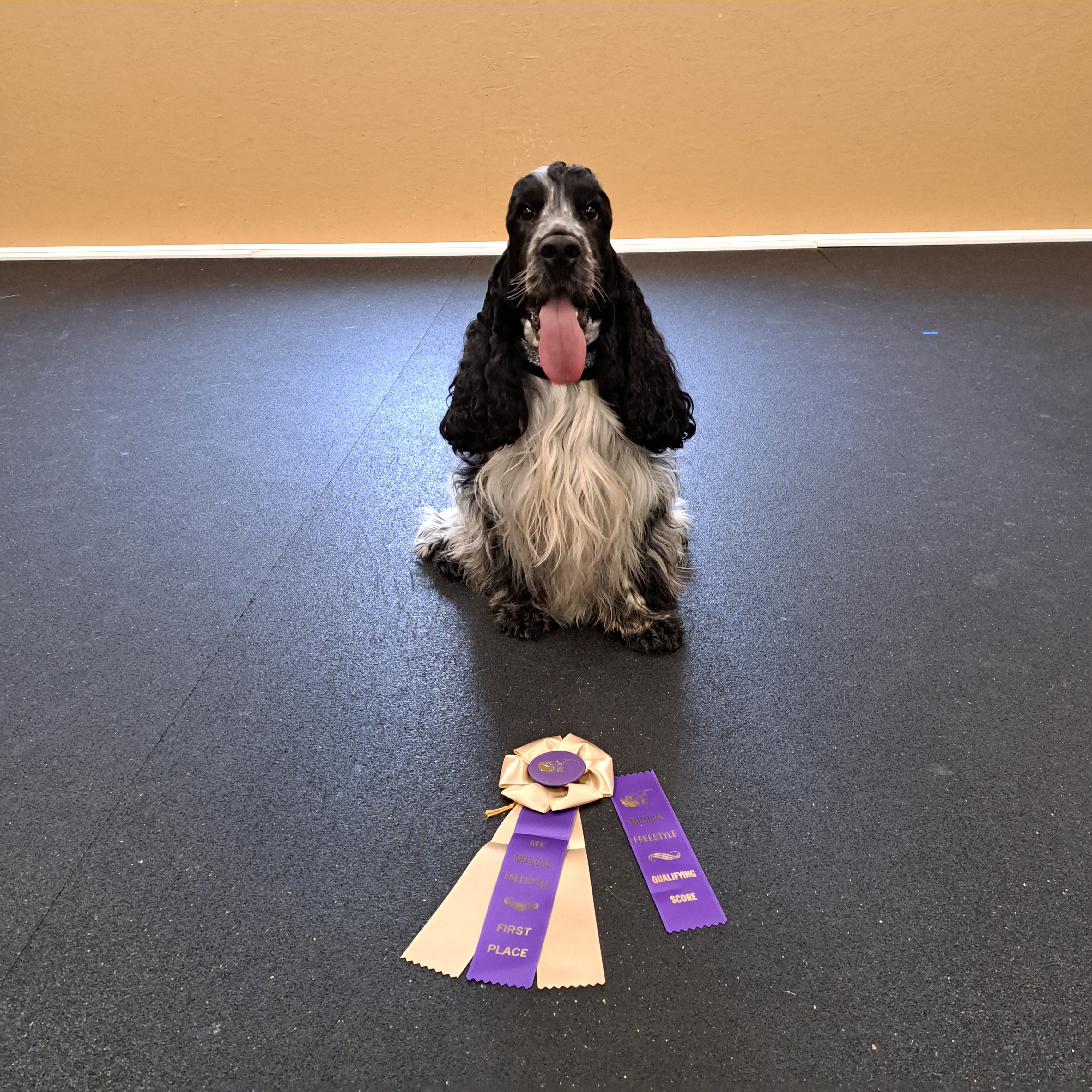
    Brian earned his first leg in Open with a solid performance, and Kerrie finished her Beginner Novice title! Re-assessing what my real goals were at the end of 2024, and realizing more important things than titles did occur, was a key element to moving forward positively.

    Here’s an excerpt of the mini-chain of behaviors that Brian struggled most with last year:

    This mini-chain consists of Command Discrimination (a mini-signal exercise), the Drop on Recall, and the retrieves. In the second half of last year, Brian would fail just one of these. (With the retrieve, the error was running around the jump; the retrieve itself was fine.) We’ve worked a lot on chaining these exercises, having positive transitions between them to maintain connection, developing distance, handling judge pressure, and jumping at angles. Between 2024’s last trial and this one, I also switched from a hand signal for the drop on recall to a verbal cue. It worked!

    Kerrie’s solution was simpler: using a PVC box to help her keep her feet still during the stay, and practicing the stay in many different locations, including with “judges” who stared at her for the whole exercise. Then I needed to gradually fade the box. She did a super job in both trials on this exercise. Now we need to go back and work on her focus, which slipped at times. But overall I was really pleased with her performance.

    Sometimes we humans make human-centric goals without recognizing or anticipating the challenges the living beings we work with might experience. It’s okay to not know, but once I do know, I need to be able to quickly adjust to their needs, and remember that the important goals, the ones that truly matter, are not measured by ribbons and titles. I’m glad to have this lesson brought to my attention once again, and that I responded as I should.

  • The AKC has created a new titling event called “Fetch,” part of their “FitDog” program to encourage more dog owners to participate in various activities with their dogs. The Fetch program is, of course, all about retrieving. It starts out fairly simple with 3 30-foot retrieves with mild distractions, and progresses up to blind double and triple retrieves at 80 feet at the highest “Retriever” level. This is the second weekend we’ve attended tests, and it’s great fun. It’s pass/fail and thus noncompetitive, and the atmosphere is supportive and upbeat. It takes two tests with two different judges to earn a title, and Kerrie earned her Intermediate title while Brian earned his Novice title.

    Kerrie passed the Intermediate level easily, which is 4 retrieves at 50 feet. The only problem that came up was my struggle to throw 50 feet! Fortunately if the length is difficult for the handler, you can get someone to throw for you.

    Brian also did well in novice, which is 3 retrieves at 30 feet with buckets as distractions. I left in the initial retrieve that required a restart, when his cocker nose got the best of him. (Novice allows 2 restarts.) Once I got him back in heel position, I made sure to throw in a different direction, and when we returned to the center throw, I threw in a slightly different area.

    We’ll definitely continue this fun new game, and I have hopes that Blossom will one day participate as well.

  • Our household has been turned a bit upside down with the arrival of a new English cocker girl to our household in February. Her name is Blossom (which might yet be changed to something else, but is currently shortened to “Blos”) and she comes from an outstanding breeder of merit from Oregon/Arizona, After Hours English cockers.

    Blossom is a complex mix of intelligence, craftiness, independence, and willingness to “do stuff,” combined with a strong personality who has admittedly taken a while to fit in with my close-knit little pack. There have been some interesting developments on that front that I’ll delve into in later posts. For now, I’ll put up a link to an early training session from March that showcases that willingness, cuteness and food drive.

  • Good things are happening with Kerrie and Brian as they continue to show the fruits of their training. I’m more and more engrossed with the world of freestyle, which combines training, connection and musical creativity.

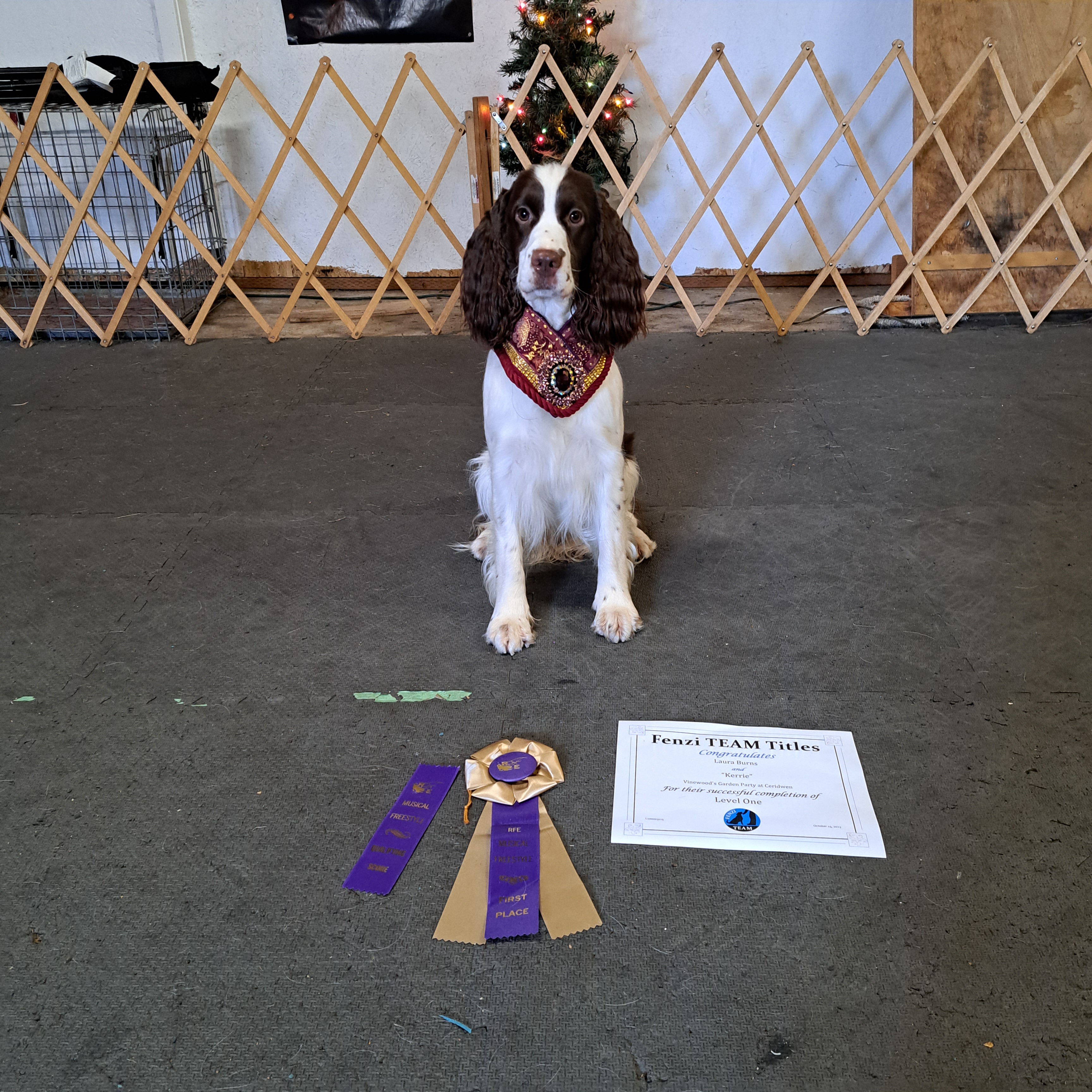
    In early November, Kerrie earned her very first leg in a video freestyle competition in the “Entry” (a required pre-novice level) InSync class. “InSync” is called “heelwork-to-music” in other organizations, and in RallyFree simply means the dog needs to stay in consistent proximity to the handler, with no distance work and no weaving, other than to provide transitions. I kept this first routine fairly simple and short, especially since I really wanted to create a waltz-style dance to a lovely waltz in the movie Emma, called the Last Dance.

    Kerrie also passed her first Fenzi Academy TEAM test. These are very fun-to-train foundational tests, at least in the first 3 levels. Levels 4-6 are more like open and utility exercises, but with some fun variation. We’ll start working on her Level 2 right away.

    Meanwhile Brian earned his first Advanced freestyle leg in InSync in the same video competition, dancing to “Recomposed” by Max Richter, which was used as a dance in Bridgerton. This is very exciting, as he just needs two Advanced legs, and then he can compete in the championship class. With this leg, he earned a thrilling score of 95, a high score we’ve never earned before.

    At this writing, the dogs have progressed further with their freestyle, which I’ll report on in a next posting!

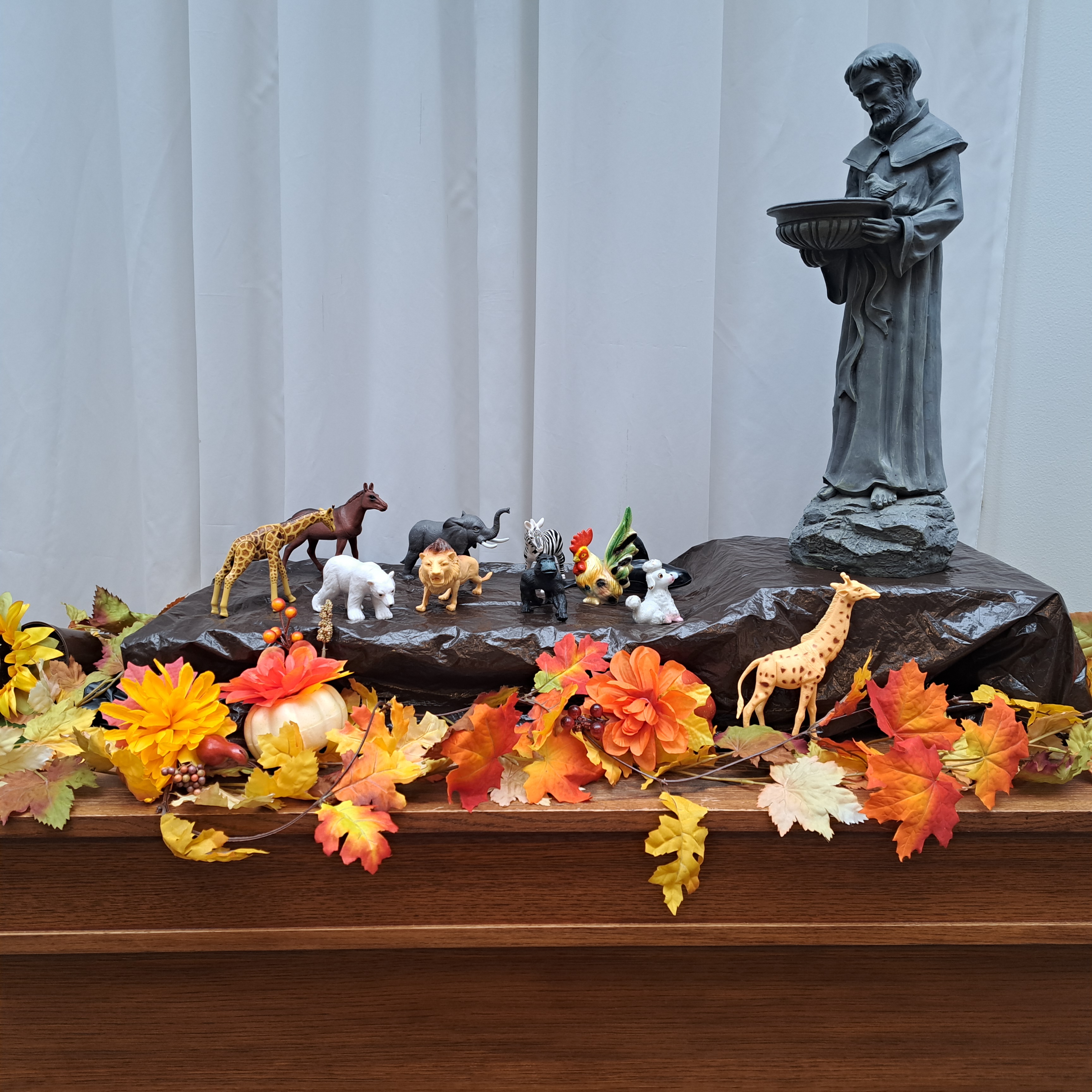
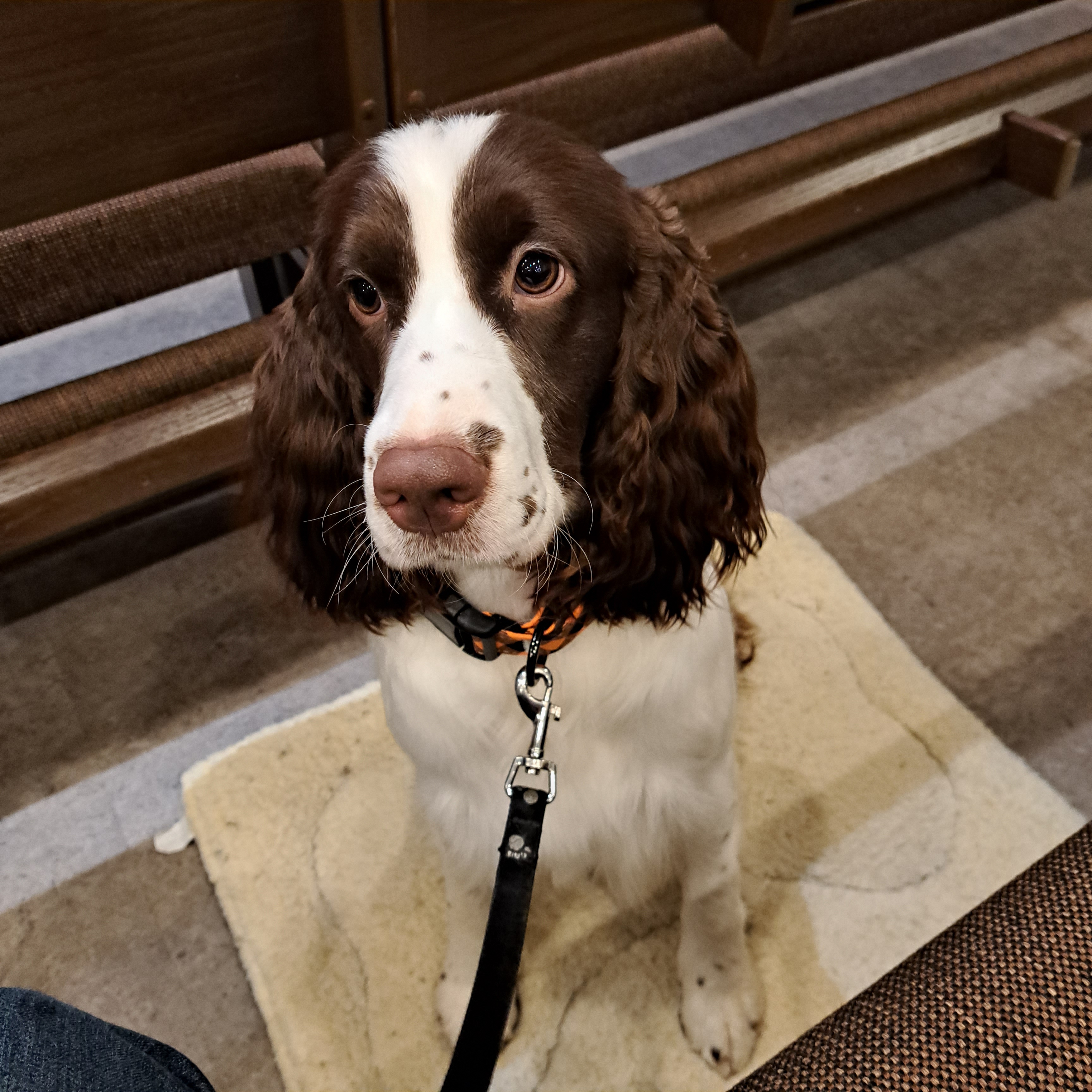
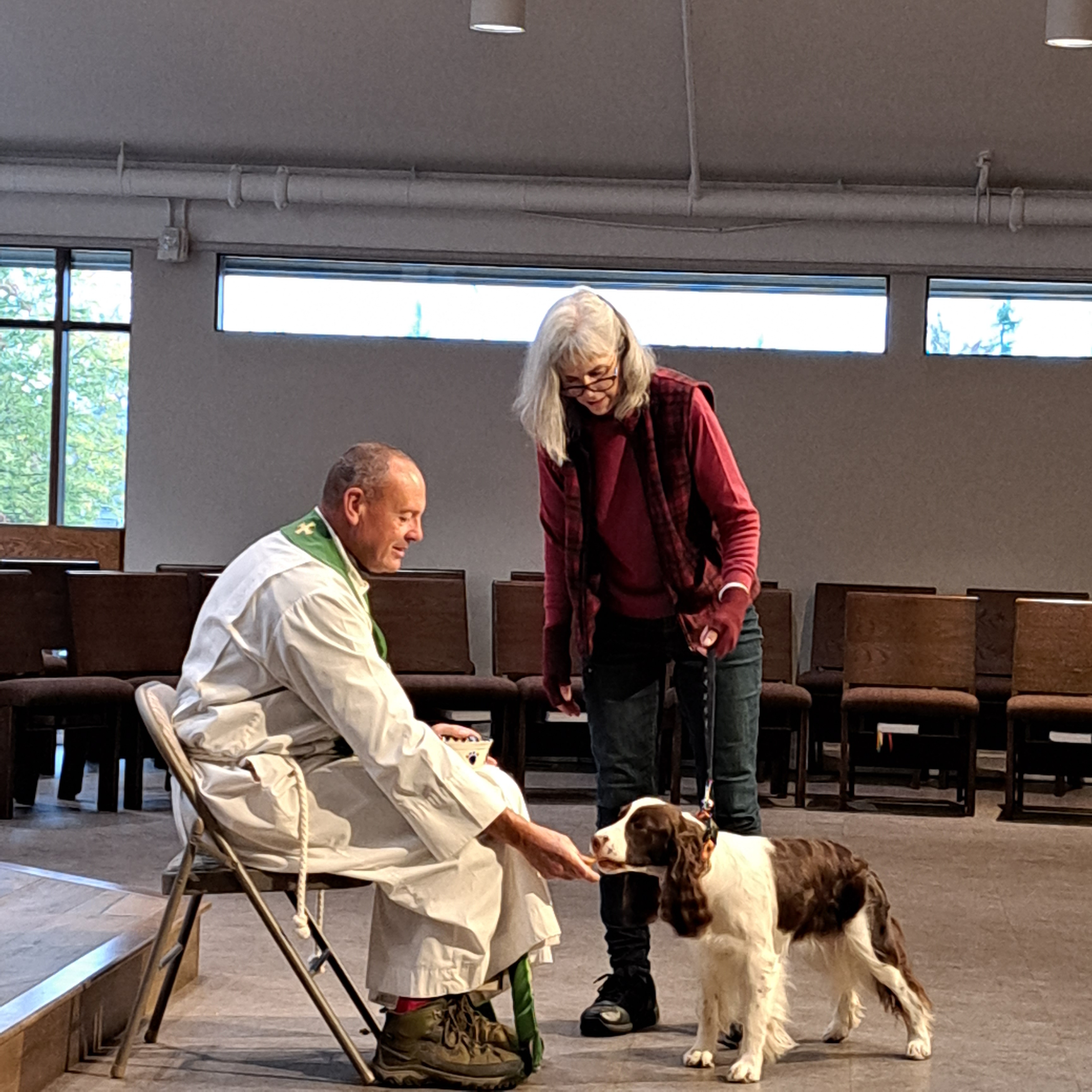
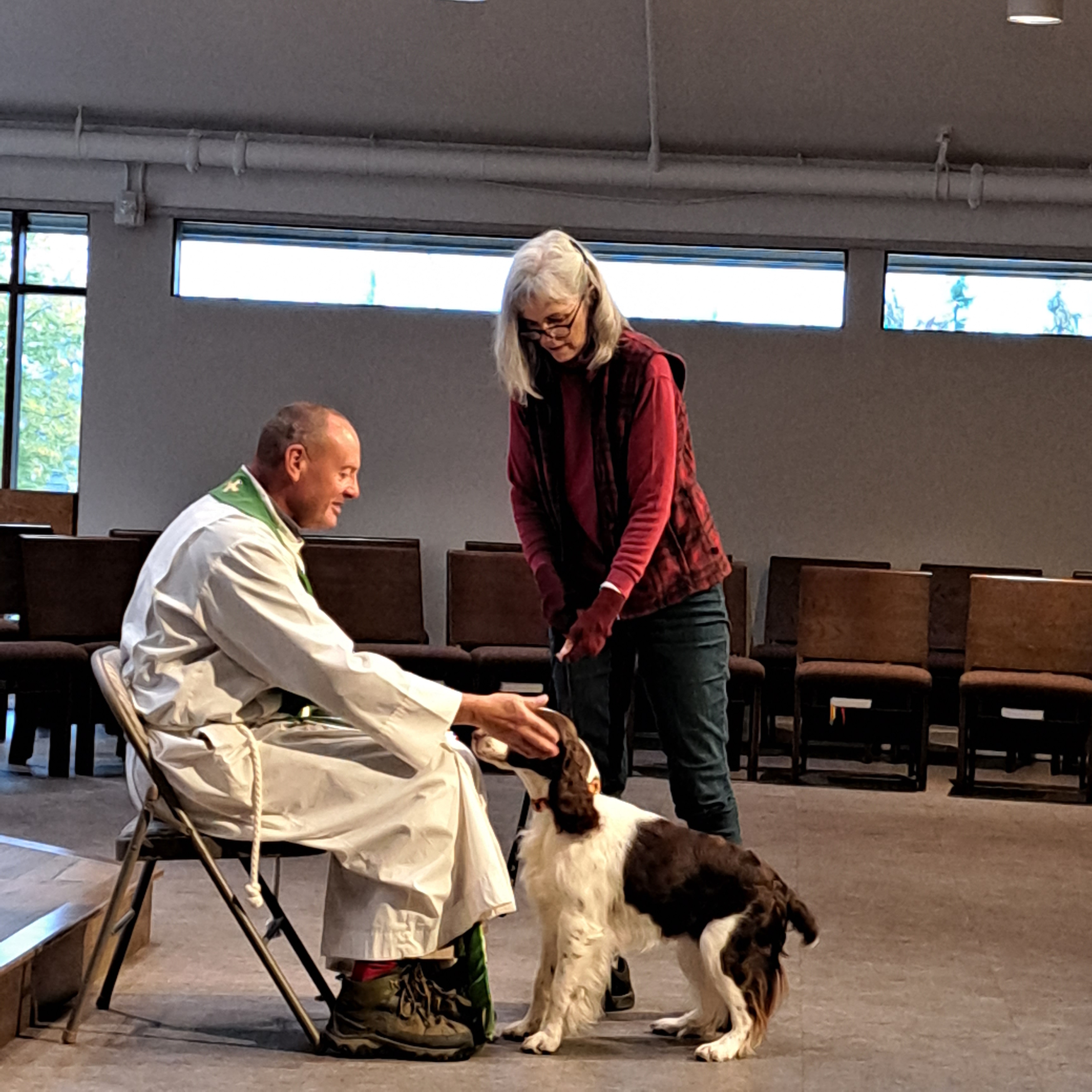
  • Our church has a Blessing of the Animals on St. Francis Day every year, and this year we decided to just take Kerrie. She behaved herself pretty well for a 1 1/2 year old adolescent, despite a cattle dog in the next pew enticing her to play, and the organist doing distracting things nearby. It was a lovely day for Kerrie!

    I’ll be a good girl!
    That cattle dog wants to play with me!
    Hey! What’s going on up there?
    Who is this guy? Does he have cookies?
    The blessing; she was just a little headshy so Father Jim approached from the side.

    And Kerrie emerged blessed for the year, and we are too with her sweet, enthusiastic, biddable self.

  • Kerrie’s tracking is coming along! That’s a good thing, since the local tracking tests are coming up. This track was 360 yards long, 3 turns, with spacing of reinforcements at about 20-25 steps. I’m in the process of reducing the reinforcements and increasing her understanding of turns, so next we’ll work on dog-eared turns.

  • Recently I stewarded at an obedience trial, and was struck as I always am by the unstructured, unfocused way many teams enter the ring. Often the handlers will rush in to the ring, completely disconnected from their dog, and then suddenly attempt to get the dog into heel position, after the dog has been pulling on the leash, or been distracted/stressed by a steward or the crowded entrance, and the result is a disconnected, unprepared team. Guess what the rest of the performance often looks like?

    Brian and I recently showed in a Graduate Novice class while we are preparing for the Open level of his obedience. Both days, I had a planned and trained ring entrance, but one of them gets a bit more discombobulated. And guess which performance went better?

    Saturday’s run was quite lovely: the best heeling he’s done in a new space and the first time he’s done his drop on recall in competition. He had a jumping blooper both days, but for the most part successfully overcame a showing issue we’ve been working on lately. Overall I was very pleased with his work, as I regarded this weekend as more of a practice for Open and a test run of my upgraded mental management skills (more on that later). Suffice to say that ring entrances are a vital piece to train for competition!

  • Kerrie is now 15 months and working on her heeling. Since I’m trying so many new things with her training, I’m keeping a video journal to review and have them for future reference. Sharing them here will help renew this blog!

    What kinds of new things am I doing? Starting with Brian, I committed to getting away from lured heeling and shaping the behaviors more. (Note that heeling in the stylized way I train for competition obedience requires many complex behaviors, not just one.) To do this, I train the position first before any movement–no more luring the dog around with her head up. Instead I’m shaping her position on a raised pot, working first on her being able to find the position on her own, then pivoting in heel.

    We’ve been several weeks away from that here, as she’s moved off the pot and is now practicing turns. Her left turn in strong; her right often causes her to swing her butt out, so then I add back in a left pivot. We’re also doing 1-step halts and “heel grids,” a system of shaping heeling through intermittant rewards created by Laura Romanik. I’ve done this system with both Robbie and Brian, and really liked the duration it builds in simply heeling around in a big clock-wise circle.

    I’ll be posting more heeling journal moments in the coming weeks. I’m very happy with Kerrie’s progress and how well the combinations of training tools are working.

  • A hectic school year dealing with re-entry into live teaching after the COVID shut-down has taken me away from this blog. Meanwhile Roz has continued to age, struggling far more than she used to. Brian is maturing, earning his first freestyle titles (through virtual shows) and preparing for live obedience trials this fall/winter.

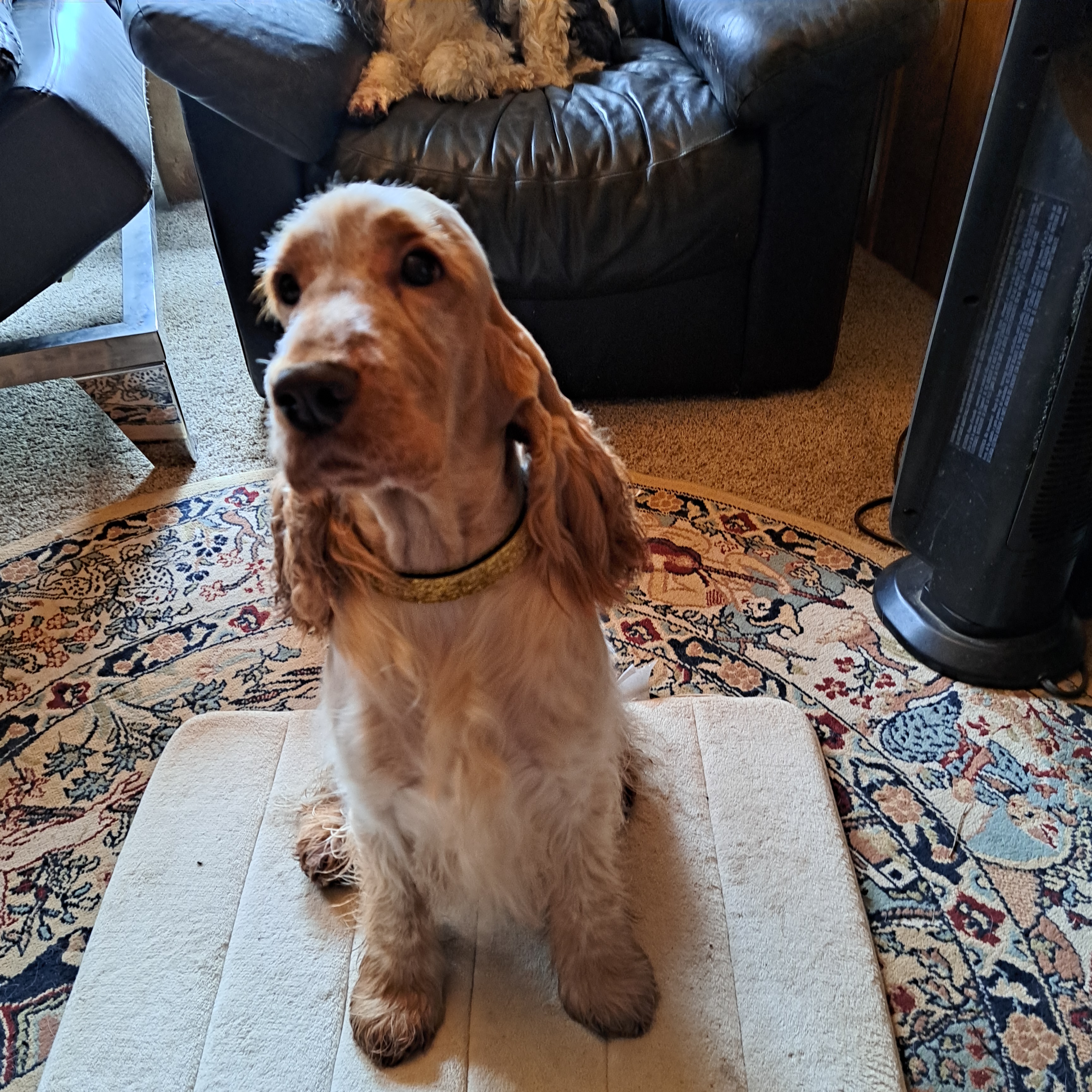
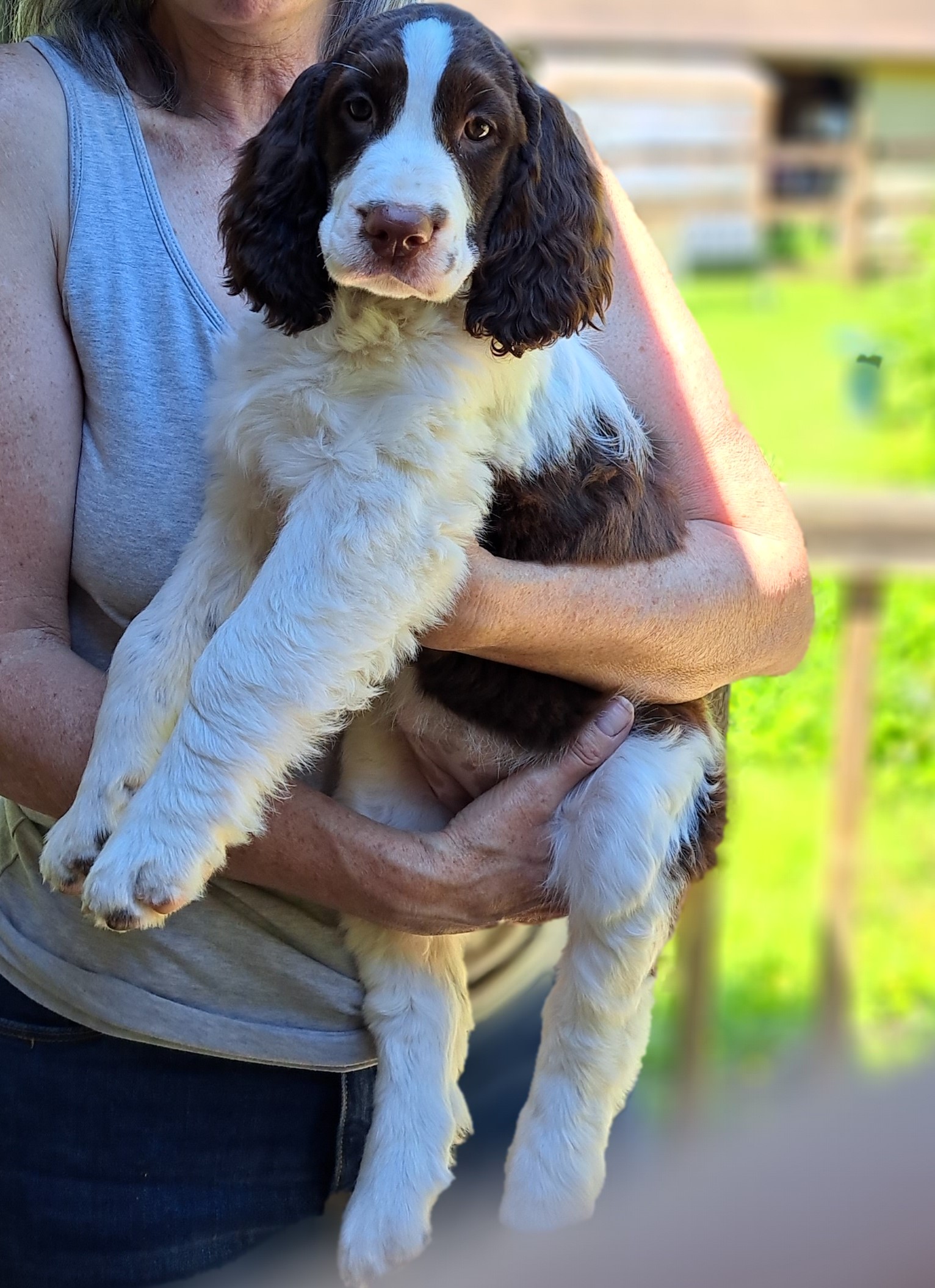
    And we have welcomed a wonderful addition to our home: Kerrie, an English Springer Spaniel from a kennel in Minnesota, one I’ve long admired and followed: VinEwood Springers.

    Kerrie has been raised through the puppy culture program, and I certainly see major benefits from her upbringing: easy to housebreak, relatively easy to handle for husbandry chores, unafraid of strange noises and objects. She has slid into our pack remarkably easily, so much so it feels as if she has always been here. She is delightful to train, although more thoughtful than Brian. Here’s a compilation of our first month of training:

    Welcome home, Kerrie!