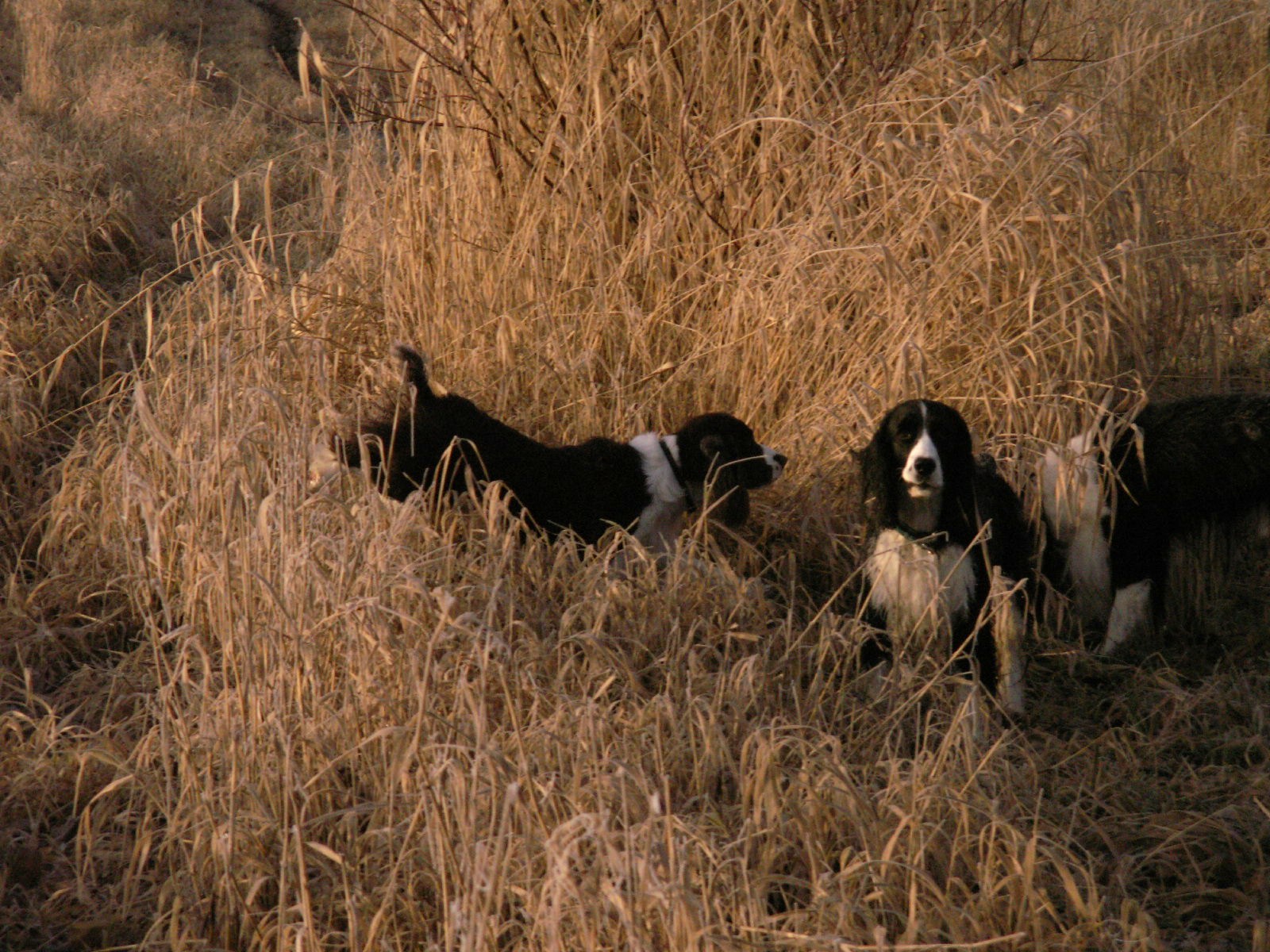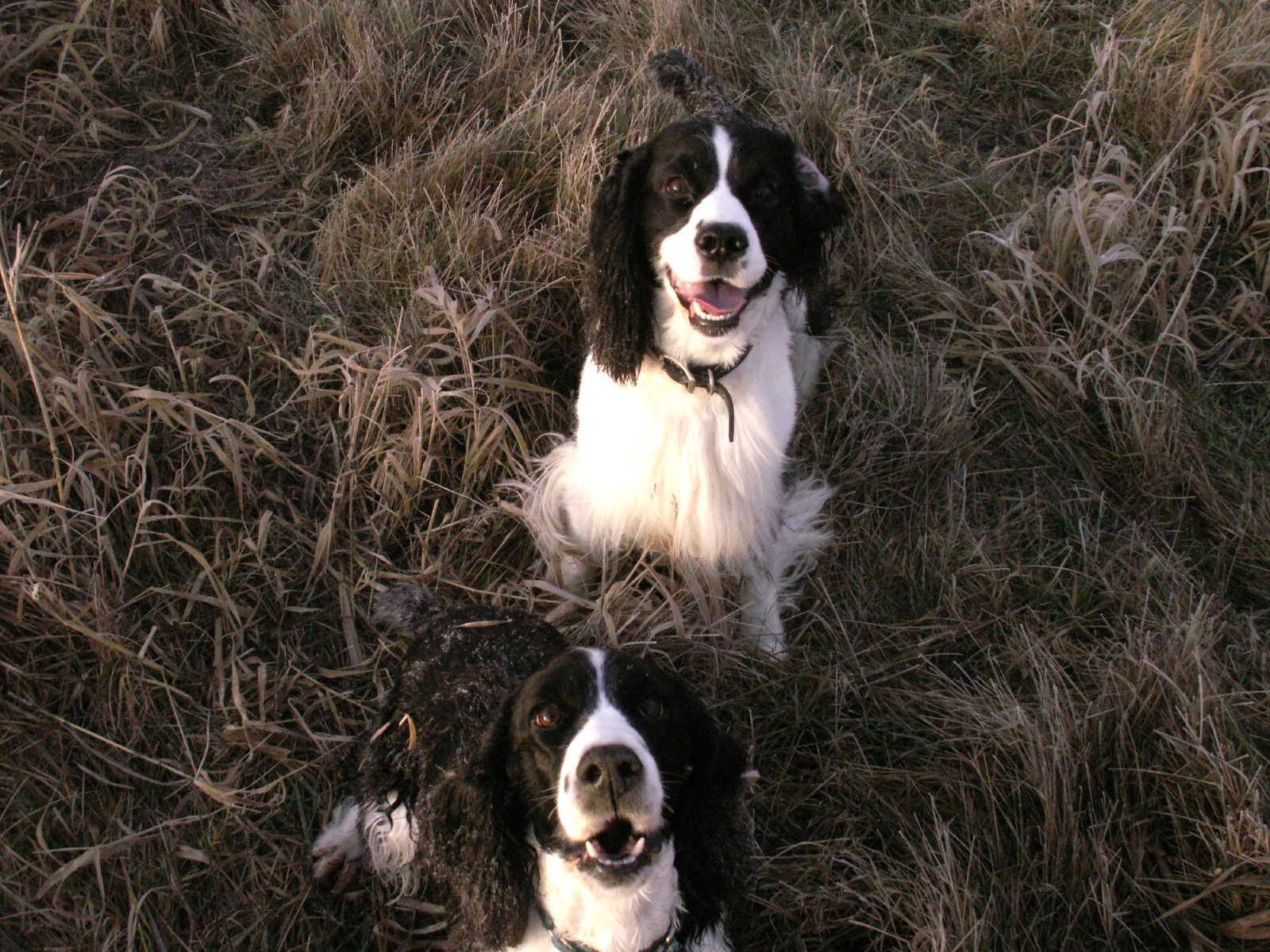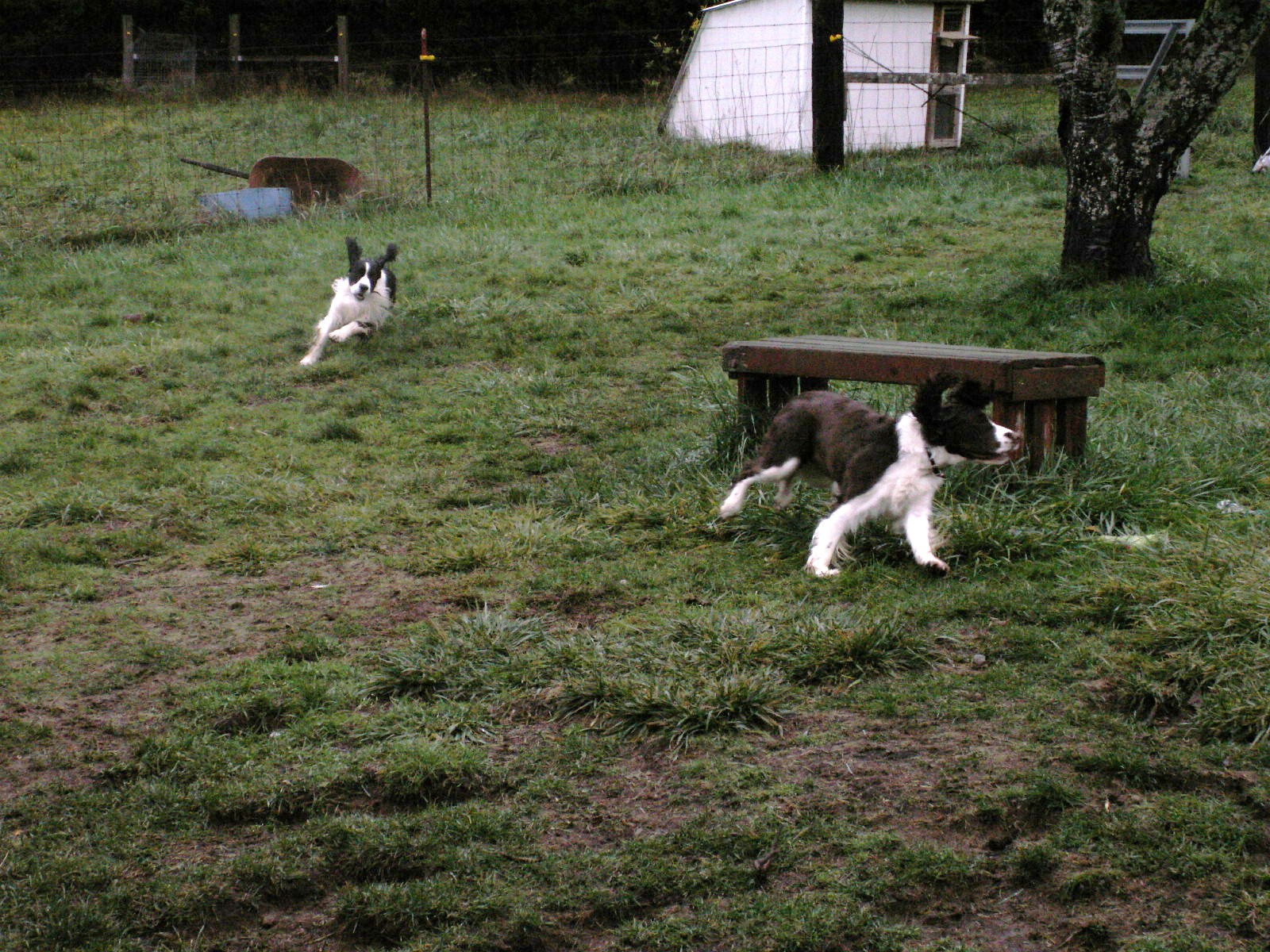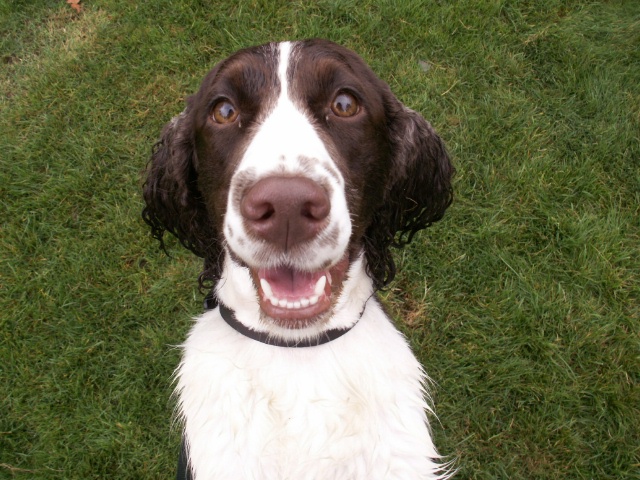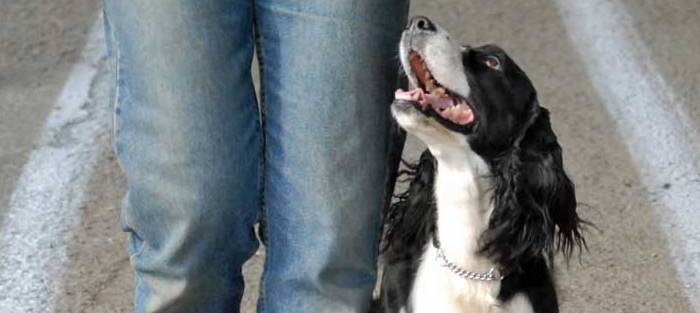
• The more I’ve worked with different breeds, the easier it’s become to recognize some of the signs of a natural retriever.  Unfortunately not all hunting breeds have retained this ability, like the show-bred English Springer Spaniel and many setters.  In my recent introduction to the Irish Water Spaniel, I’ve found an intensity for retrieving in the breed  that is great fun to work with, and presents several hallmarks of natural retrieving.

    Sunday I had a chance to work with Journey, who has shown me a natural retrieve from the beginning of our relationship.  While her retrieve has been somewhat shaped since then, I haven’t done any consistent structured retrieve training.  Here’s a clip of some simple bumper work we did.  You can see I’m not worrying about “stay” at this point, but I’m in fact restraining her to keep her drive intense:

    So what are those hallmarks of a natural retrieve, that are evident in this clip and have been present in her work with me from the beginning?

    • In the first bumper throw, Journey gets confused by several objects on the ground.  A trainer would say she’s “missed her mark.”  Yet she continues to work at it until she finds the bumper.  This shows intense drive to complete the retrieve.  Less natural retrievers might simply give up or wander off.
    • Journey gallops out to each bumper, but more importantly, she gallops back in!  This shows how well Journey’s prey and pack drives are integrated.  She cares as much about bringing the bumper back to me as she does about picking it up.  Less natural retrievers will often shift to a trot coming back in, or even worse, a walk.  For them, coming back to the pack means taking the fun away.  For Journey, coming in is an essential part of the fun.
    • Journey willingly gives up the bumper to me–more of that pack drive.
    • I’m giving Journey some food treats, but it’s obvious that she cares much more about being praised by me and playing with me.  And she loves the bumper–it’s self rewarding.  I really don’t have to come up with secondary motivators for her to enjoy this activity and do it willingly.
    • Journey doesn’t let down after several retrieves.  In fact, we could keep doing this for quite some time before she gets bored.  A less driven retriever will lose interest after 2-3 retrieves. 

    Journey’s love of retrieving has all sorts of implications for the rest of her training.   Most importantly, her strong pack drive can be counted on in moments of stress, challenge and frustration.  More than anything, she wants to work with me and get praise from me.  In a stressful moment in training, her retrieve also gives me a quick “stress-buster” where I can just pull her bumper and get her prey drive going.  Her love of retrieving also gives us some alternate ways to teach some complicated exercises, like the “go-outs” in directed jumping, where the dog has to run to the other side of the ring and turn and sit on command.  Lastly, retrieving comes so easily to her, we can spend more of our time on other exercises!   Open is all about retrieving, so it’s a class that should come quickly to her.
  • I’m plotting a series of articles on the natural retrieve  for the Springer Spotlight, the parent club’s national publication,  so bits and pieces will be showing up here. 

    Spaniel field trialers speak confidently of their spaniel’s “natural retrieve,” lauding it as a mark of superiority over spaniels that must be taught this seemingly simple task.   By “natural,” they mean the retrieve behavior seems to be in-bred, presenting itself in early puppyhood and requiring very little training.  A field-bred springer spaniel without a natural desire and ability to retrieve is certainly looked down up as being of “lesser stock.”  

    While the retrieve is vital for fieldwork, it tells us far more than we realize about the dog’s trainability and character.   Here’s a quick clip of Kani in the obedience ring, performing a retrieve as a scored exercise.  Then we can break it down to its multiple parts to see how complex a behavior it really is.

    The most elemental pieces of this exercise, which can seen in a “natural” state are:

    1) desire and ability to “mark” (watch) a moving object.  Trainers working from a theoretical background will identify this as the dog possessing and utilizing “prey” drive.  In the world of dog training, “drive” really means “instinct,” which the dog is born with or genetically mapped with.  These drives can be observed in puppies as soon as all of their senses are functioning and they are mobile.

    2)  desire and ability to run out to the object.  This is really the “chase” portion of the prey drive.  Many dogs, depending on breed, will have a strong chase drive.

    3) desire and ability to pick up the object.  This is where the goal of the prey drive becomes apparent.  The object is picked up because it’s meant to be eaten.  Some dogs will now start chewing on the object (whether it’s a bird, bunny rabbit, dumbbell, or hunting dummy). After all, why would you have a prey drive unless it brought you food?  This is the beginning of any actual retrieve, but it’s not the full picture.

    4) desire and ability to bring the object back to the human.  This is a huge step, and takes the whole exercise onto a new level.  Here trainers will say the prey drive has been interrupted by “pack” drive–a drive that has been bred into many spaniel breeds to work with their human, rather than follow a very natural instinct to eat their prey. Young dogs will display conflict over their prey and pack drive by playing keep-away games with their human partners, rather than bringing the object back.

    5) desire and ability to release the object to the human.  Here is the ultimate in willingness to work with a human and forego the powerful prey drive.  The dog gives the object up willingly to the human.  In obedience trials, you’ll sometimes see dogs reluctant to do this, and hold onto the dumbbell while the handler tugs on it, trying to get the dog to give it up. It can become a rather embarrassing battle, not to mention significant loss of points in the ring.  In the field, this battle between prey and pack drive can cause the gamebird to be destroyed and unfit for human consumption. 

    So you can see just how complex this exercise really is.  It brings together two conflicting and complex drives, and ultimately asks the dog to work willingly with his human partner, even over the natural and profound drive to find sustenance. 

    The retrieve can be taught to almost any dog, using multiple motivators to make it a game, rather than an act of dominance.  However, many dogs are born with this entire exercise genetically mapped, including the willingness to bring the object back to the human.  This natural ability is amazing to watch, and can be seen in puppies as early as 5-6 weeks.  This is the “natural retrieve.”  Unfortunately for the show/pet bred English Springer Spaniel, this natural retrieve is being lost. 

    Many pet owners might not care about their spaniel having a natural retrieve.  But when we consider steps 4 and 5 above of the retrieve process, it becomes clear that the retrieve, particularly in its natural state, tells us a significant amount about a dog’s desire to work in concert with his/her human partner.   In short order, it can signify a dog’s willingness, obedience, trainability and “biddability.”    If the natural retrieve is disappearing in the show/pet bred Springer Spaniel, what else is being lost?

  • Last weekend kicked off the first “cluster” of dogs shows for the new year.  In our area, they begin at the Puyallup fairgrounds in mid-January, and then during the following weekend move down to Portland for 4 days of shows.  Because these two weekends cluster several days of shows, many professional handlers and big-name dogs come to Puyallup.

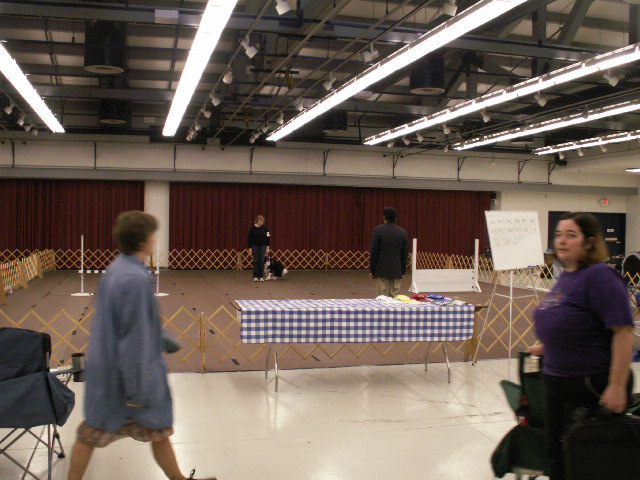
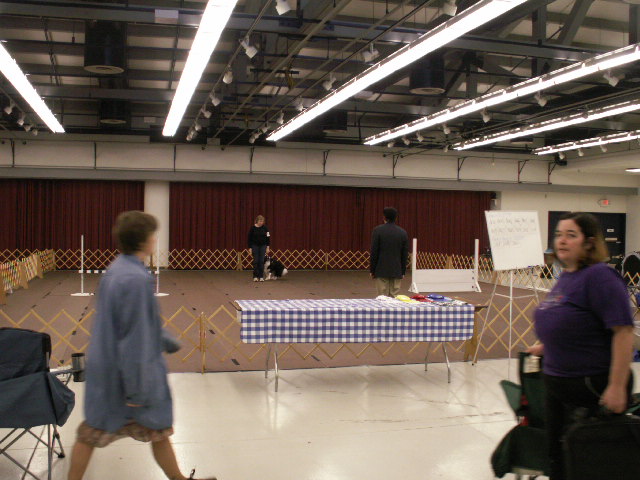
    The obedience trial, a sport dominated by amateurs rather than professionals, is held in a different building than the conformation rings.  Here’s what it looks like:

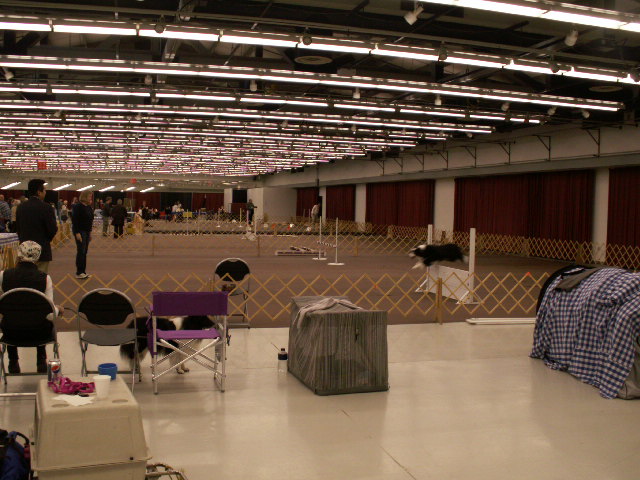
    The various rings are divided by baby gates, and in each ring a different class level is competing.  In the ring closest to the camera is the “Utility” ring, which is the highest class and certainly the most difficult.  Here’s another angle on the Utility ring.

    The person wearing the dark jacket in the ring with the dog and handler is the judge , and he (or she) calls out the various commands and scores the team.   

    Kani and I competed at this trial over the weekend, as well as in the “Open” ring, which is another advanced class.  By competing in both these classes, we have possibilities to earn points towards an Obedience Trial Championship (OTCH) if we beat other dogs.  Another opportunity is an advanced title called “Utility Dog Excellent” or UDX, which is earned by passing both classes on the same day.  It’s more of an award of consistency; the OTCH is an award for outstanding performance.

    Right now, to be honest, Kani and I are struggling with both.  Dog trialing certainly has its ups and downs, and we’re in a down.  Saturday she passed Utility and earned 4th place.  But 4th place wasn’t enough to earn us any OTCH points.  Then she flunked Open, by incorrectly performing one of the exercises that she usually does a great job with, the drop on recall.  Sunday she was only entered in Utility, and flunked that class, although some of the exercises she performed quite well.  (You have to pass each exercise in the class to earn a passing score, so if you flunk one thing, you’ve flunked the class.)

    Issues for her seem to be concentration and stress.  Certainly they go together.   My job is to sort out what is causing her stress, alleviate it in the ring, and increase her concentration.  The impulsive nature of the spaniel makes this more challenging.  But if obedience trialing didn’t have fascinating challenges, I wouldn’t still be doing it! 

  • For the last several months, it’s been our Sunday morning ritual to attend handling classes.  Handling classes provide a training environment for us to practice the game of the conformation ring, where the dog is judged on his structure (conformation) and movement.   Here’s the ritual:

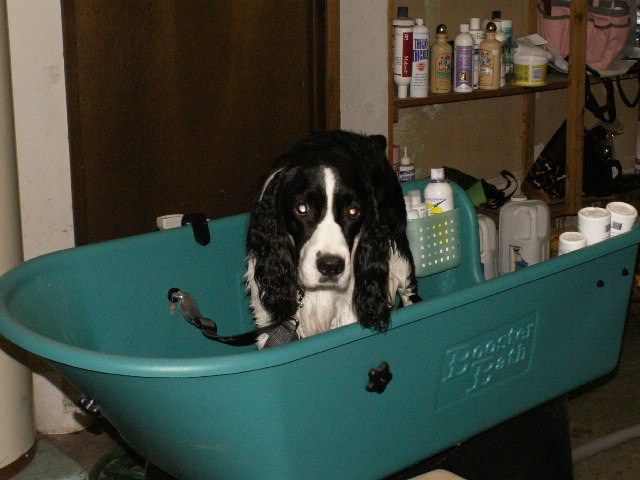
    7:30 am: Reardon gets a feathering bath.  He needs one once-a-week anyway for those long feathers, and bathing right before class gets him used to a typical show day.  Here he is looking rather hangdog as we wait for some whitening shampoo to do its thing.

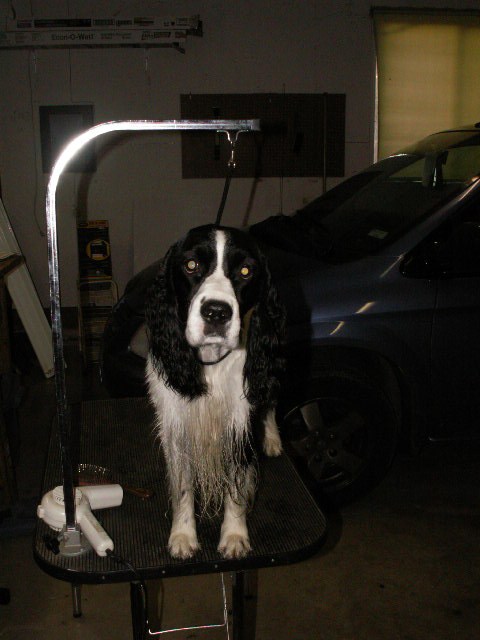
    8:15 am: Reardon gets up on the grooming table to get blown-dry.  Today we won’t have time to get him totally dry, but at least he gets some minutes with the dryer on.  It’s all good experience for a show day, where the blow-drying can take up to 45 minutes.

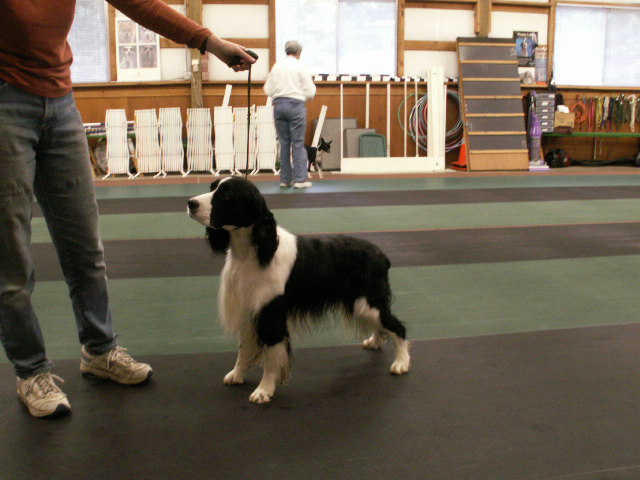
    9:30 am: class.  Now Reardon can start having some fun.  He likes the show ring.  After all, it’s fairly simple and involves lots of treats!   Today is a packed class as many people are getting ready for the Puyallup and Portland cluster of shows starting next weekend.  We’re practicing our freestacking while we wait for class to start.

    You can see he’s still a bit wet from his bath, which would be a huge no-no in the real ring.  Next weekend, he’ll be looking much more fluffy and white. 

    In the next few months I’m going to have to develop some priorities for this year.  Showing his mother in the obedience ring and Reardon in conformation is almost impossible to do at the same time.  At the end of a show day involving both, I wind up exhausted instead of enjoying it.  My feeling is, if it’s not fun, why do it?  Re-prioritizing might mean giving Reardon to a professional handler.  A professional handler will finish his championship sooner than I could, but it would be very expensive.    My last springer Champion, Hank , cost about $1000 all told, but that was 10 years ago and he finished quickly. 

    Why do I want this conformation championship with Reardon?  Good question, and this is part of my re-prioritizing.  The historic purpose of dogs shows was to evaluate breeding stock.  However, Reardon will never be bred, because he carries a genetic marker for an eye disorder (PRA) and he has allergy problems.   So why show him?  Two possible reasons: if I handle Reardon to his championship, it will be valuable experience for me to show a dog in a very competitive ring.  If a pro handler finishes him, he has the championship piece of a prestigious ESSFTA (the springer parent club) versatility award.  This difficult award requires two performance titles at the most advanced level, and two other performance titles at the novice level.  Reardon shows potential to earn this award, so why not go for it? 

    These various priorities bounce around in my head while driving to and from dog classes.:-)  The bottom line, though, is that we’re having fun!

  • New Years’s Day was a perfect day to spend with a training buddy of mine, Terri Pope.  We rented an obedience building in Olympia for a few hours and helped each other with our dogs.  Today I wanted to see how Reardon’s heeling was coming along, so we made a video.  Videos help immensely with seeing the progress of a dog’s training, and often reveal important mistakes I’m making with my handling.  Not only did I spot various details to work on, but it was a good record of how long Reardon could handle fairly demanding training–about 6 minutes.

     I’m fascinated by the question of how to increase duration of certain behaviors, especially ones that require intense concentration.  Spaniels were not bred to concentrate on a single behavior for very long; instead as hunters they were required to respond quickly and alertly to any changes in environment: changing scent, the flash of a rooster pheasant’s wings in the brush, the sudden flush of the bird out of cover.  So long-term concentration does not come naturally to a spaniel.  Anyway, here’s the video:

    When I got home I watched the video and made some notes in my training journal.  A training journal is another tool I’ve picked up in the past few years, and its current format is inspired Lanny Basham, the Olympic gold medalist in rifle shooting, who has created the best mental preparation performance program I’ve found.  His website is http://mentalmanagement.ipower.com.  More on Lanny some other time. 

    My notes for Reardon are:

    • our take-off is messy; I’m moving as I say “trot.”  I need to stay still, say “trot” and then move forward with him.  The messy startoff causes his head to drop and his body to get out of position;
    • work on his anticipation of the about turn; work with barriers where I don’t always do an about; stop and feed in the middle of the about turn; make sure my body cues are clear;
    • work on maintaining attention, especially as his interest lags.  In this video at about 5 1/2 minutes, I simply brought back out the food as a lure.  Instead, I need to play more, break things up, try a toy in the arm;
    • overall great work in a new building with attention and attitude; transitions into the slow looked better than I thought they would;
    • work on forging, especially in the beginning.  Go back to a dowel;
    • Geez, I need to go on a diet.  Sitting around for 6 weeks has not done me any good!
  • Particularly when I ask my dogs to join me so much in my endeavors, and they do so with such willingness, I do what I can to acknowledge and fulfill their essential nature.  It is the essential nature of the Springer Spaniel to run, hunt and find game.  So on this Christmas morning, at dawn, we find ourselves at the Cherry Valley Wilderness Recreation site just north of Duvall, WA, about 15 miles from home.  I don’t shoot, but since it’s a release site, I can at least hope for a pheasant or two to get flushed up.  When we arrive, the fog is still heavy but the sun is trying to break through:

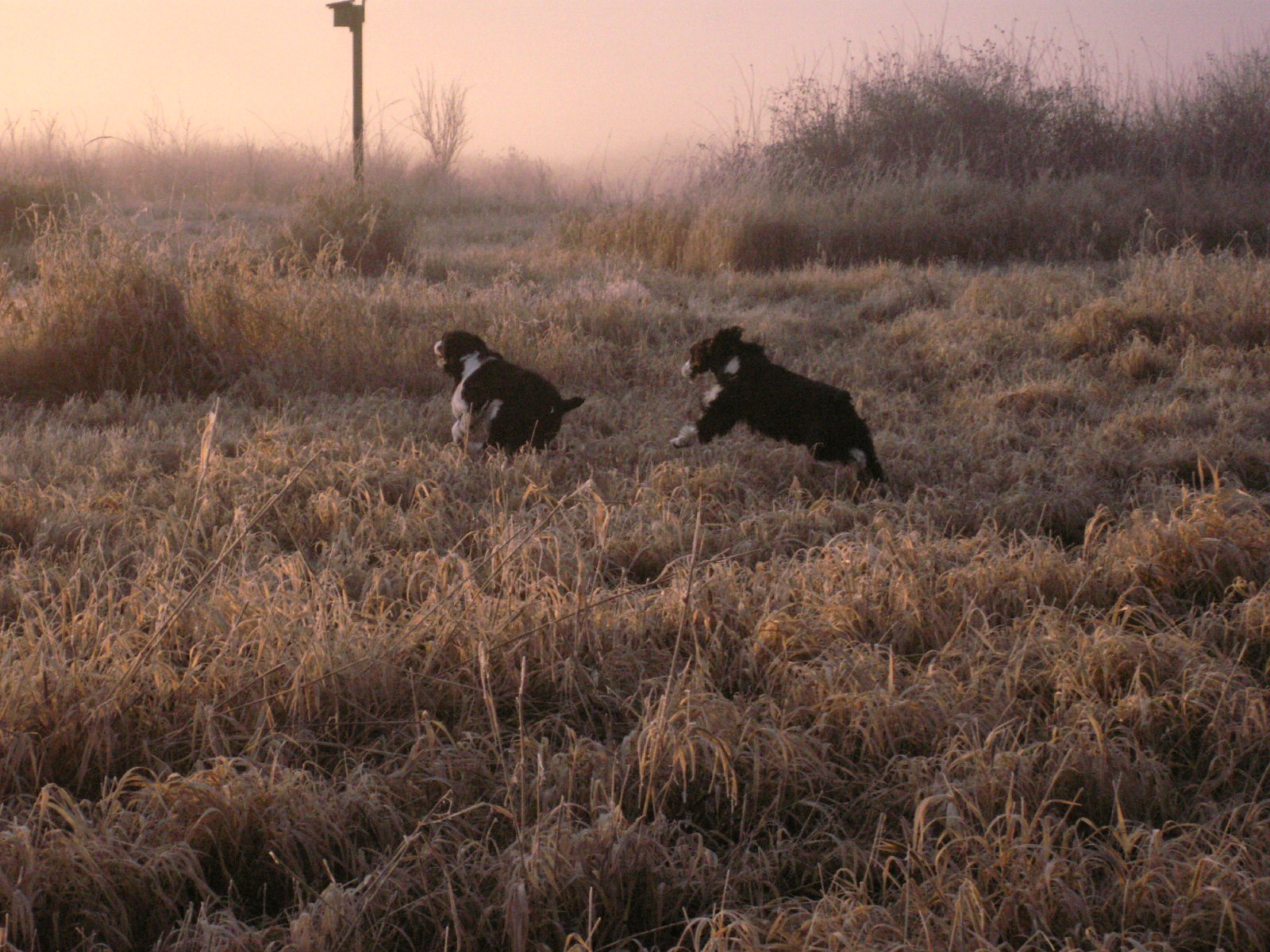
    The young springers haven’t had much hunting experience, but mom has.  Yet they all instinctively know to cast out, the two girls one way…

    and Reardon sweeping in from another direction.

    Then the resident guppy, Rozzie, finds a canal to get into…

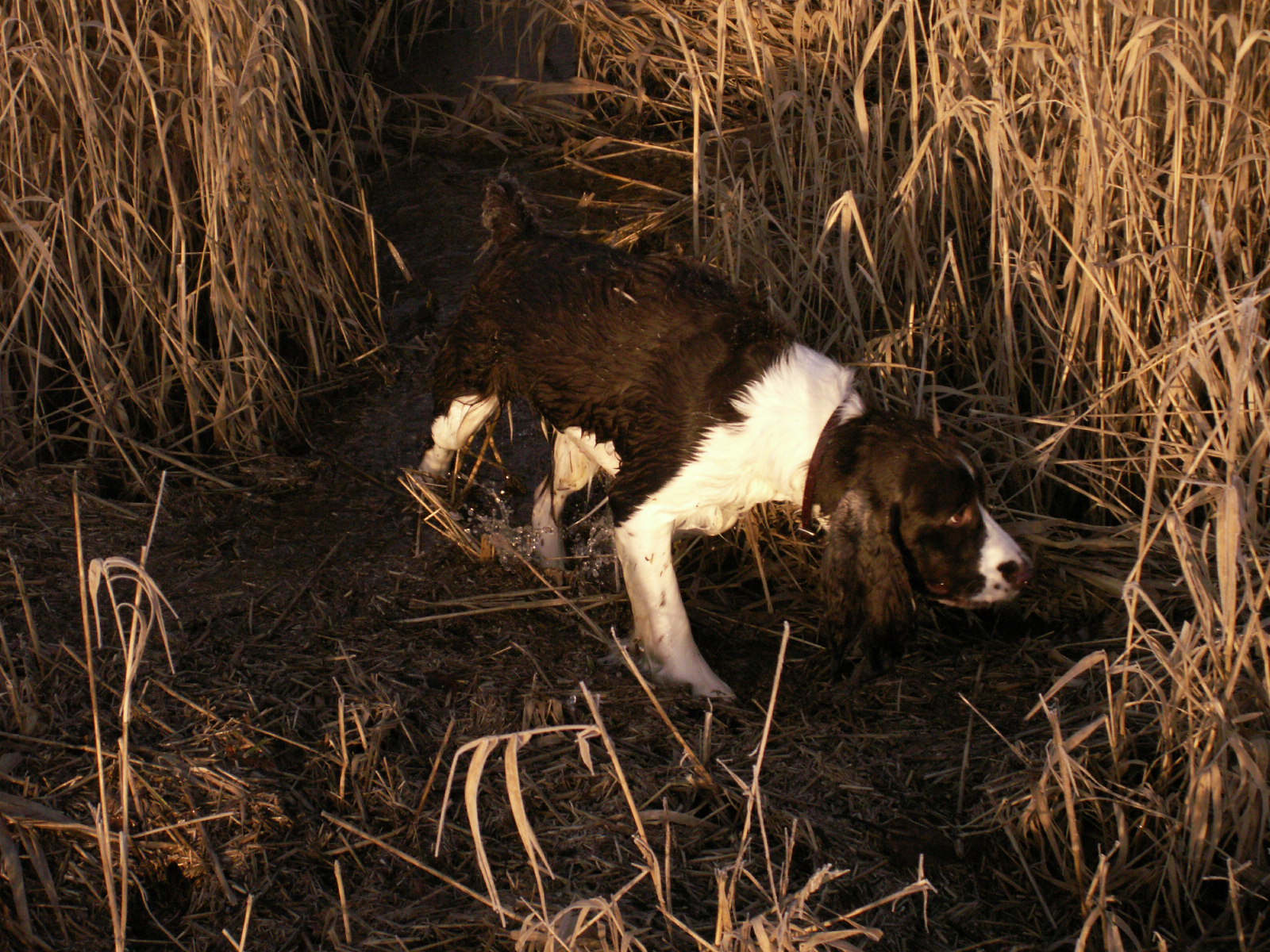
    Later she dives into one and can’t get out.  I have to lean down in the heavy grass and haul her out.  We’ll avoid the canals after that!   I am also pleased to see the young dogs instinctively seek out cover in the hedgerows, the favorite hiding spots of pheasants…

    We work on whistle commands.  They quickly respond to the whistle command to turn in the direction I’m headed (tweeet-it!), but the recall command (twee-twee-twee-twee)  is a little less reliable.  Finally I get a good response…

    and they get lots of praise and cookies. 

    Afterward I send them back out again.  When we’re out running, I make sure that the recall is not always associated with “leash back on, fun’s over.”  At least 75% of our recalls mean come in, get praise and cookies, and then release for more fun.  This approach seems to ensure happy, willing recalls.

    Finally it’s time to go home.  What a wonderful way to spend dawn on Christmas morning!

    MERRY CHRISTMAS TO YOU AND YOUR LOVED ONES, AND HAVE A WONDERFUL 2010!

  • The rest of my life (“real” life? “unreal” life?) has stalled our training and my blogging: fighting to get my energy back after surgery, then catching a cold, then the pressure of getting final writing portfolios graded.

    Meanwhile, Reardon and Rozzie are clearly saying, “I’m ready!”  Through many physical behaviors (their primary language after all), they’re telling me they’re ready for more training that lasts longer, presents distractions,  and puts together more of the pieces they’ve been learning.  (Trainers call the act of putting the pieces together “chaining” behaviors).  In other words, they’re maturing and in some doggie sense, they know it.  Not only do they know they’re ready for more demanding training, they want it! 

    So this entry is really a note to self.  It’s been so long since my last puppy that I had forgotten about the proverbial “light bulb” of maturity that occurs in many breeds at 2 years old.  With some larger breeds, trainers will say this comes later, say 3 or 4 years, but whenever this light bulb flicks on, it can be almost eerie: the dog goes to bed a puppy, and seems to wake up the next day an aware, matured dog. 

    So how do Rozzie and Reardon say “I’m ready”?  The eagerness they have for their training sessions tells me a great deal.  After I’ve put on Rozzie’s working collar and leash, she throws herself at the front door, while Reardon spins in circles.  But it’s more than that: both of them are offering difficult behaviors that, prior to the “light bulb,” would have required me to lure them (meaning food right in front of their muzzle) or offer very frequent reinforcement (short spaces of the behavior with frequent stops for food rewards).   Both can handle greater distractions, and both are heading towards that magic moment when the work itself becomes a pleasure. 

    With Rozzie, I can see her readiness in her ability to heel at attention for long sequences, without visible food and with distractions.  In the photo below, Rozzie is heeling next to a ditch that has been difficult for her in the past.  It must be a ditch full of delicious smells, but today she pays it no mind:

    Reardon, the “unnatural retriever,” is now retrieving his dumbbell quickly and happily.  There were times I thought he would never gallop in with his dumbbell.  A trot on the return is acceptable in the obedience ring, but I’d prefer an eager, fast return.  Getting this from Reardon has meant lots of running away from him and making it a game, but today it’s all up to him:

    So, they’re ready!  I better be ready too.:-)

  • “Exuberance is beauty” – William Blake

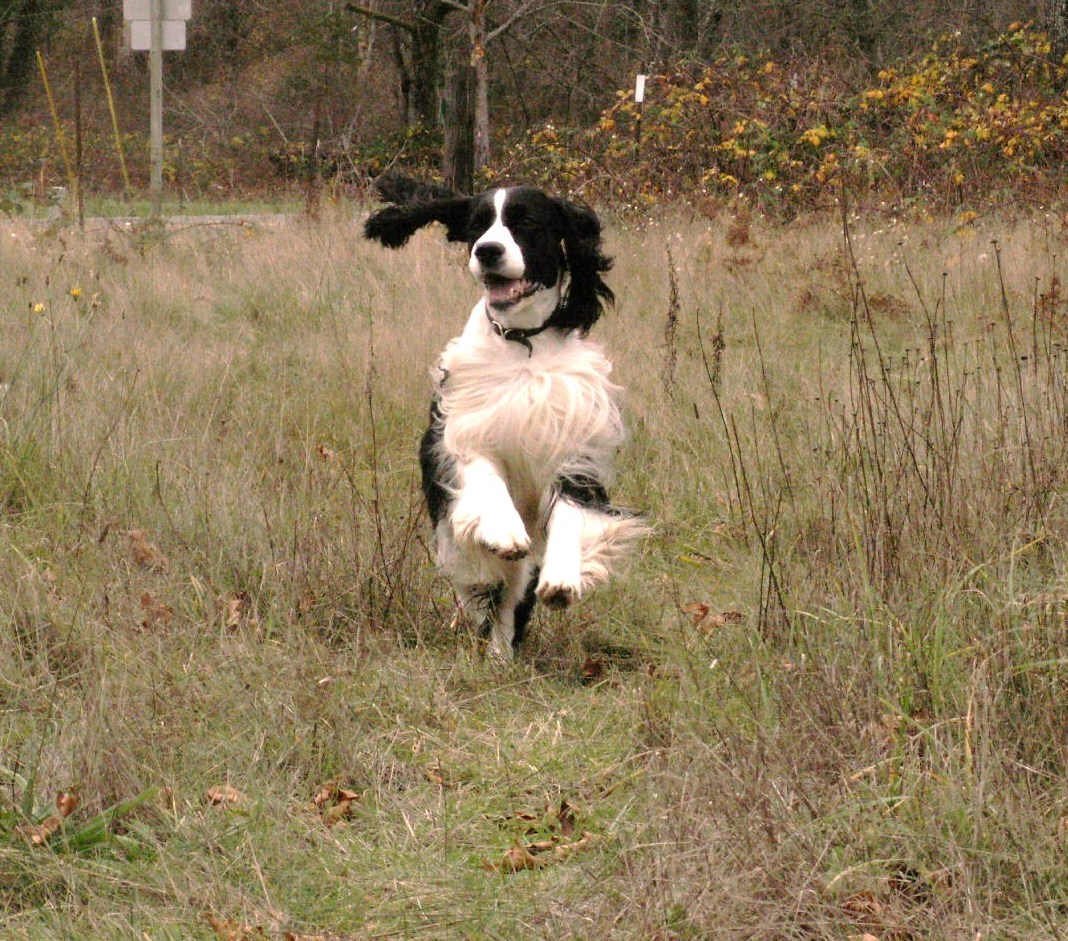
    Right now I’m recuperating from surgery and don’t feel well enough to do anything with the dogs other than walk out to the pasture with them.  They still give me great delight in their ability to play..

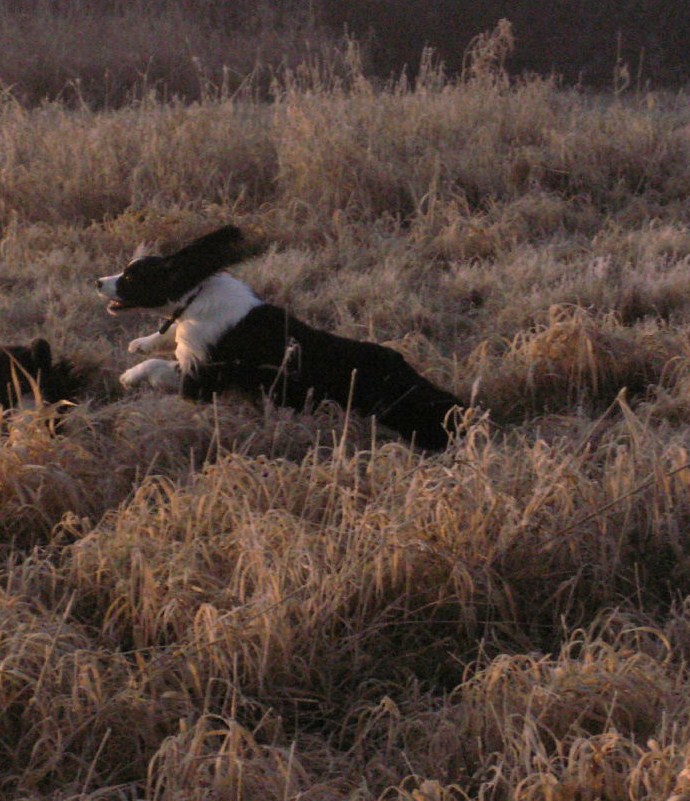
    and their effortless grace while in full extension…

    and the joy they seem to take in their own exuberance….

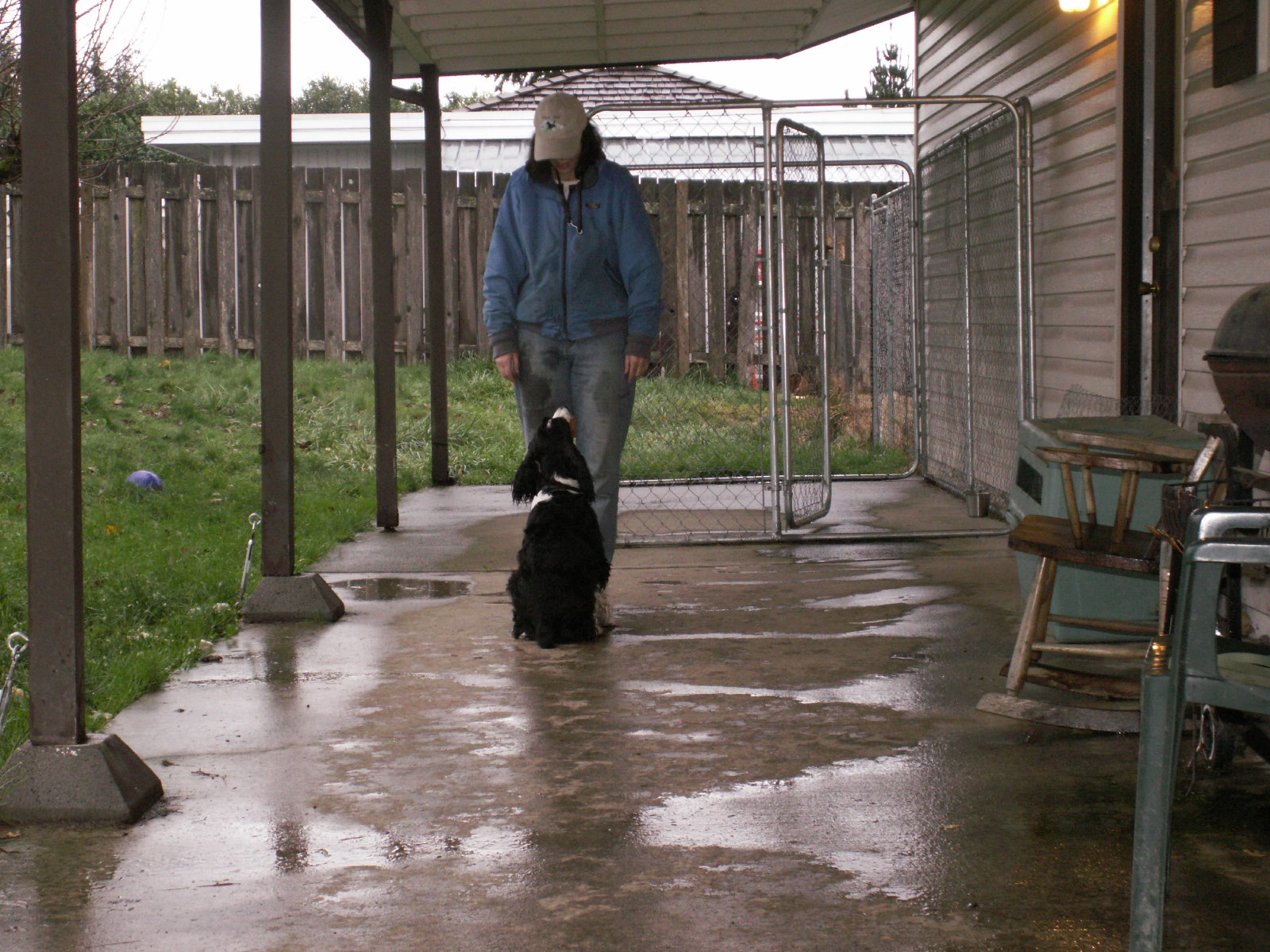
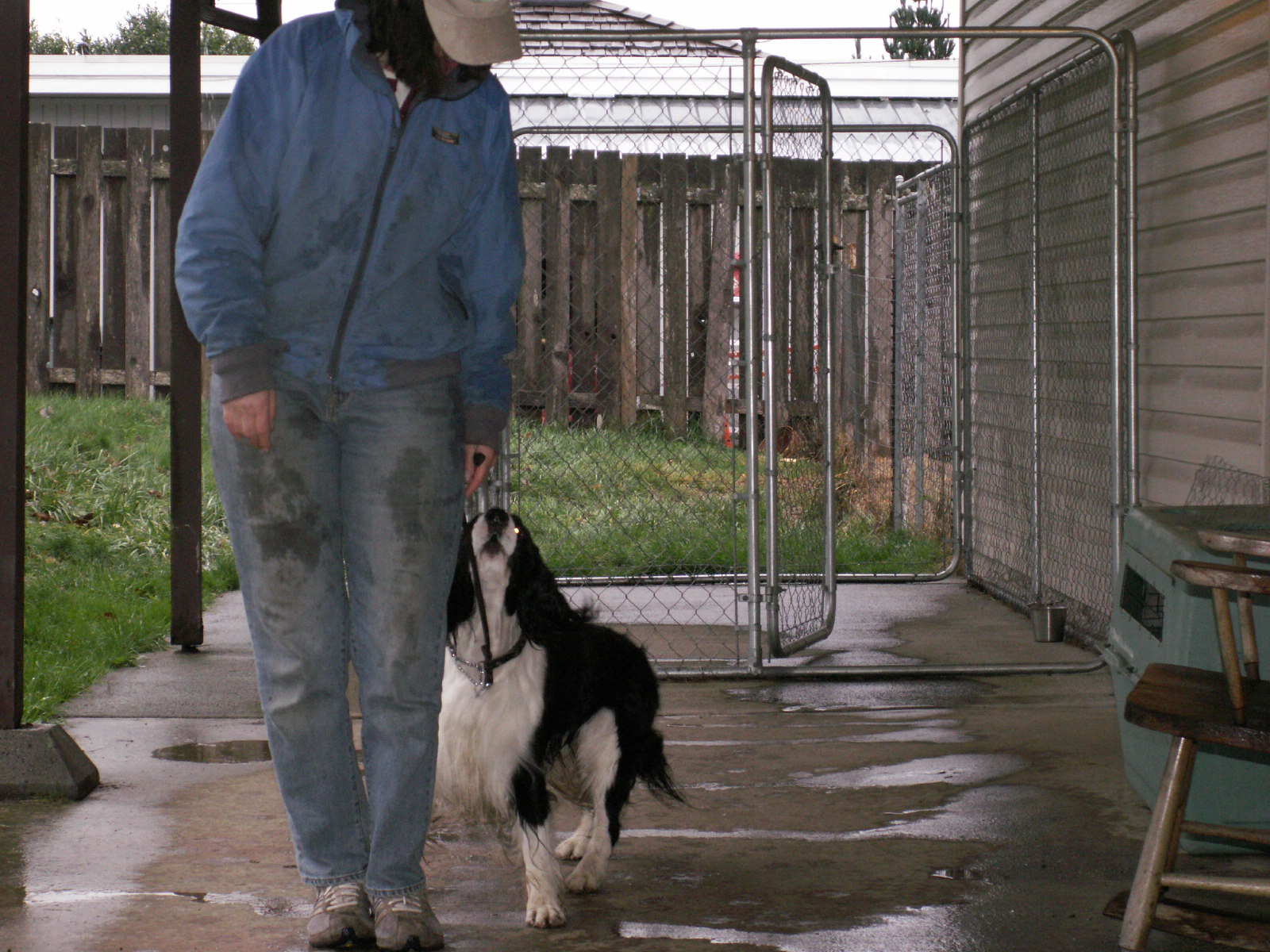
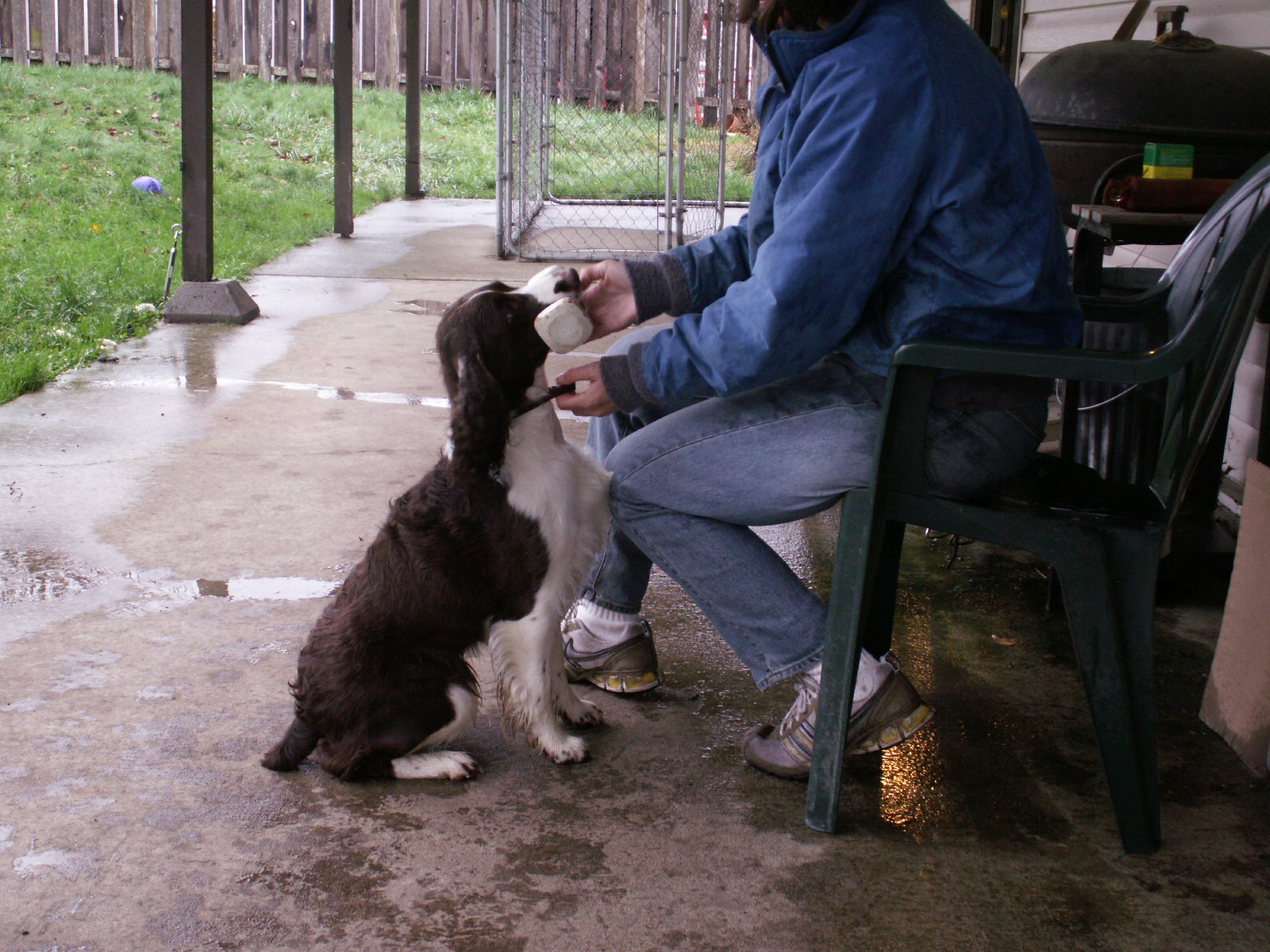
  • Sunday as the rain poured, we worked under the patio roof on details:

    Fronts with Kani holding a retrieve object, a leather scent article…

    Finishes (where the dog moves from front to heel position) with Reardon…

    and holding the dumbbell with Roz…

    The challenge with drill work like this is keeping it fun and light.  That means knowing how much repetition each dog can take and stay enthusiastic, what each dog’s internal motivators are, and what each dog needs to understand that these drills are always done with speed and precision.  And I better not get bored either!  Bored trainers create bored dogs.

    But no matter if obedience training is done in longer sessions or these shorter drill sessions of 5-10 minutes, something else is going on beyond simply teaching behaviors.  In these moments when we come together around a physical exercise, we are both being “trained” to a picture of teamwork.  In the end, we both become obedient not simply to a set of exercises, but to a relationship.  It is a relationship where, through the grammar and syntax of  training, I am saying to the dog, “I know you…I am fully present for you…You are vital to me.”  And the dog is saying it back. That’s really what it’s all about.

  • Yesterday was a day off from training, so instead we went for a run around our neighborhood for some conditioning work.  As I’ve read equestrian writers during the past few years, I’ve become more and more convinced of the importance of proper conditioning for the dog sports we do.  While some agility trainers seem to understand its importance, so often in obedience and conformation, dogs are “weekend athletes” who are asked perform complex physical tasks on the weekend but lounge around as couch potatoes during the week.  Horse trainers often talk about training a young horse physically for two years before expecting complex physical behaviors like “collection” (where the horse is properly balanced and driving from the rear).  This is not only so that the horse learns the behavior mentally, but also possesses the necessary muscling to perform the behavior.

    Horse trainers are also much more aware of warm-ups and cool-downs, talking specifically about what should be done during these sessions (often lasting 15 minutes or more), before the actual training even starts.  Yet in obedience trialing, frequently you’ll see the handler pull the dog  out of his crate five minutes before they go in the ring, with a warm-up consisting of running through specific exercises, and no attention paid to warming up the dog physically.  Then what happens after 7-10 minutes of ring time that intensely taxes the dog physically and mentally?  Back in the crate, so that the handler can socialize with friends.

    So I’m trying to improve my warm-ups and cool-downs.  I need to do more stretching with Kani before she goes in the ring, but after our ring performance we now go on a walk outside, to cool us both down mentally and physically. 

    And we jog too.  Not as far as we should, because I’ve got an unexpected surgery coming up and so we’re doing the minimum, about 1 1/2 miles.  Rozzie and Reardon have just joined in, as they’re now two years old and their bodies can handle the impact.  They especially love the jog, with Rozzie squealing and Reardon throwing himself at the door (need to work on that).  Better conditioning has transformed Rozzie mentally and physically–she’s a lot more confident, with bright eyes and more energy.  Being third in the pack, and not trained as intensively for obedience as the other two, I’ve worked hard this year to build her confidence.  The jogging and agility class have done the trick.

    A side note: when I was showing my gordon setter in conformation years ago, a judge told me afterwards that she needed to be in better condition.  This puzzled me, as she had daily runs in the country and was in excellent shape.  As we talked, I realized by conditioning, he meant coat rather than muscling.  While I know today that not all conformation judges prioritize the dog this way, I remain almost as bewildered by this attitude now as I was then.